The surname Vazaios, Vazeos, Bazaios, Bazeos, Vazeggios, Bazeggios, Bazegios (Baseggio), or Baseglio is of Franco-Levantine origin, of the Catholic faith, and of Venetian provenance. The spelling of the family name evolved through various stages before reaching its modern, standardized forms.
Learn More
The Vazaios family originates from a branch established by one of the companions of the Venetian Marco Sanudo, founder of the Duchy of Naxos (1207), following the capture of Constantinople by the Franks in 1204 and the subsequent division of the territories of the Byzantine Empire.
Τhe family coat of arms is described by Joseph De-Kigallas as follows:
On a field divided diagonally to the left, the first bearing a five-pointed star and the second likewise the same. Crown of five peaks. (Pandora, Vol. VII, No. 149, 1 July 1856, pp. 114–115)
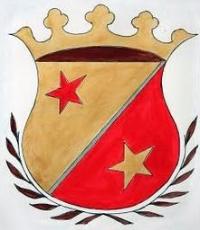
The red color of the coat of arms represents blood.
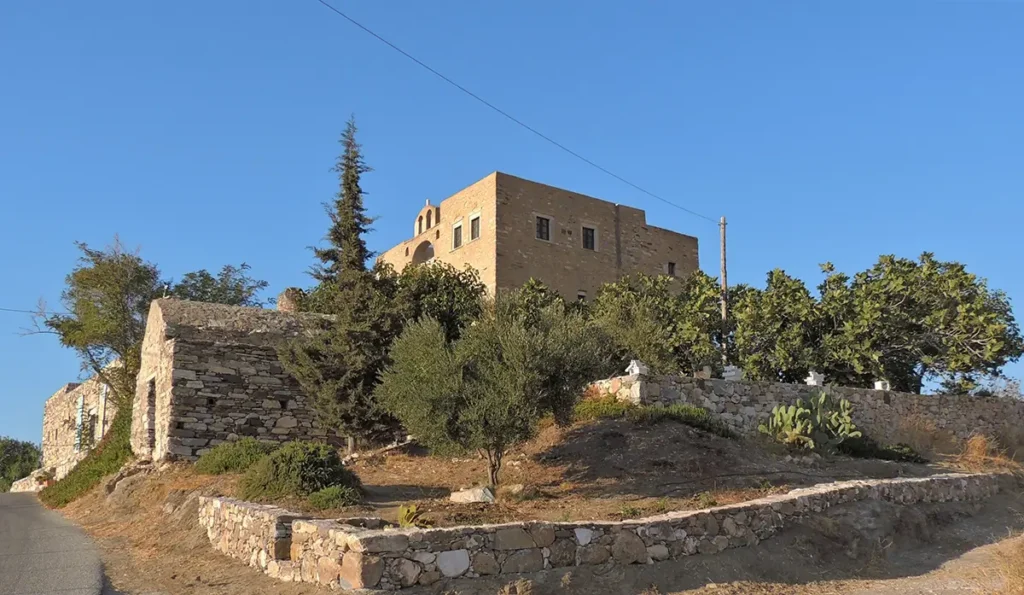
On Naxos, a unique monument of Cycladic cultural heritage is the Monastery of the Holy Cross, more widely known as the Bazeos Tower. The tower dates back to the 17th century and is a characteristic example of monastic post-Byzantine architecture on the island.
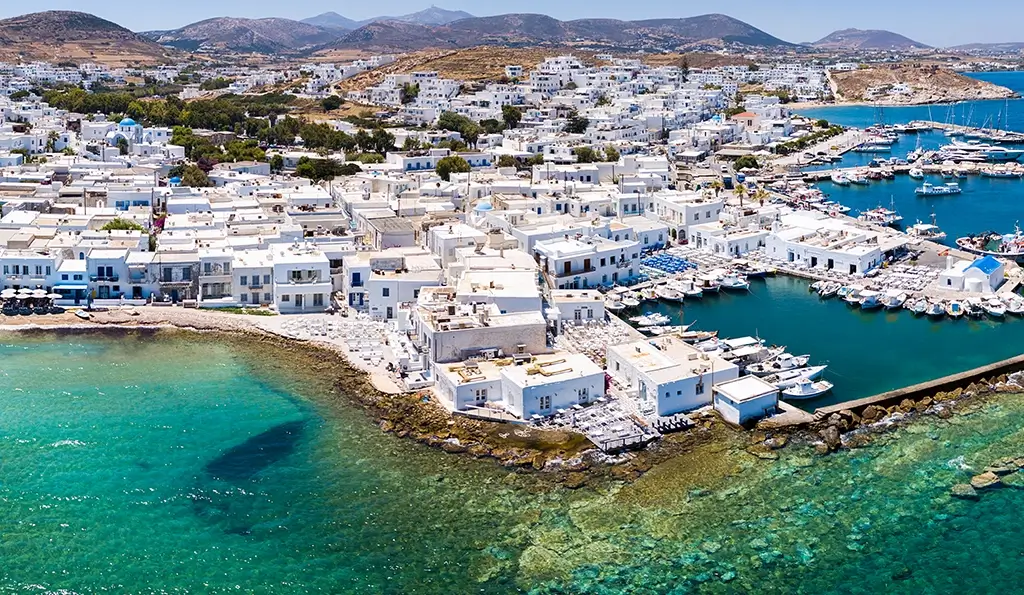
References to the Vazaios family on Paros include: – A property dedication in Xechoriani dated 29 March 1750, where Dimitris Bazeos is recorded as a witness. – An attestation of the family in Marmara in 1883.
Santorini
On Santorini (Thira), the family is among the island’s old families and today survives only under the surname Vazaios, as the Vazeggios variant became extinct following the death of the last descendant, Eleni Vazeggios, who passed away at an advanced age in her mansion in Fira.
- In a will dated 17 May 1689, Angelos Bazeggios is recorded as a witness.
- On 23 December 1700, Angelos Bazegios is recorded as Voivode of Santorini, an office of the Ottoman administration.
- In 1839, Philippos Vazeggios donated 12 drachmas toward the construction of the University of Athens (Zenon, 1961, p. 276).
- In Pandora (Vol. VII, No. 149, 1 July 1856, pp. 114–115), Joseph De-Kigallas refers to the family and presents its coat of arms.
On Santorini, the Vazeggios family produced three priests, six nuns, and one Orthodox priest. Several family members distinguished themselves in the diplomatic service, most notably the consul Andreas Vazeggios during the previous century. The Vazeggios family is also related to several prominent clerics from Thera, including Antonios Delendas, Archbishop of Corfu and Athens (1898–1911).